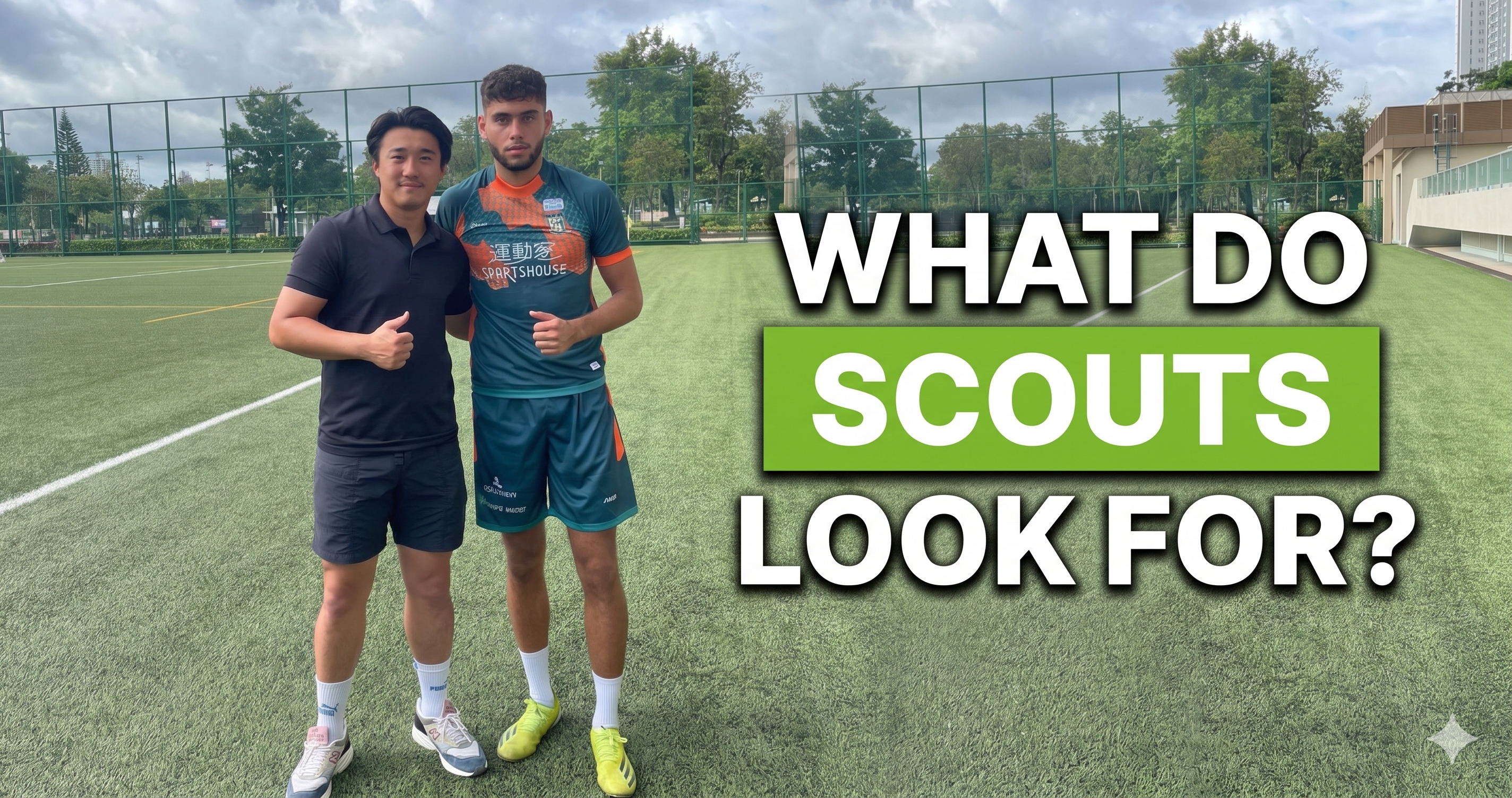
Your Highlight Reel Is Lying to You
Here's the thing: your 60-second highlight video doesn't show the 85 minutes you were invisible. It doesn't show the runs you didn't make. The passes you played safe. The moment you hid from the ball when things got tough.
Every scout is different. Every coach is different. Some watch full matches. Some watch 10 minutes and make a decision. But the first thing any scout looks for is how you impact the game. What makes you different?
The Real Truth: Scouts watch what you do when things go wrong. They watch body language. They watch what you do without the ball. That's where the truth is. That's what separates the players who sign contracts from the ones who go home.
Football Is a Game of Opinions — And That's the Point
One scout watches you play and thinks you're incredible. Another scout watches the same game and doesn't even write your name down. That's not a flaw in the system. That's the system.
Professional football is subjective. There's no objective "good enough." There's just: does this club need what you offer? Do they believe in you? Will they take a chance on you?
One scout says yes Tuesday, another says no Friday. Same player. Same match. Different opinions.
The players who survive aren't the ones who take every rejection personally. They're the ones who understand this is how it works. They keep going. They understand that one person's no doesn't define their career.
What Do Scouts Look For — The Real Answer
IMPACT.
Not how technical you look. Not how fit you are. Not how clean your first touch is. Not whether you have good numbers in a development center. Can you actually make a difference? Can you do the job a professional club needs done?
That's it. That's what scouts are evaluating.
You're a fullback? Are you winning your duels? Are you putting good crosses in when you get forward? Are your crosses creating chances?
You're a striker? It's simple. You need to score goals and show that you're scoring goals. That's it.
You're a midfielder? What are you good at? Breaking up play? Driving the ball forward? Your final pass? Changing the field? What makes you different from the next midfielder?
Every position is different. But the question is always the same: what makes you different?
What Do Scouts Actually Evaluate in the First 10 Minutes?
Scouts make snap judgments. In the first 10 minutes, they're assessing: What are this player's tendencies?
Do they demand the ball or do they avoid responsibility? Are they aggressive or passive? Do they move into space or do they wait for the ball to come to them? Do they demand high? Do they press? Do they take risks?
It's not about a single action. It's about patterns. What's your default behavior when the game is at a normal pace?
A scout makes a hypothesis in the first 10 minutes, then spends the next 70 minutes confirming or refuting it.
Do Soccer Scouts Really Watch Highlight Reels?
Yes — but not the way you think.
A highlight reel is a door opener. If your first 30 seconds shows impact — a clean finishing sequence, a key pass, a crucial tackle, something that makes them think — they'll watch the full match.
But here's what doesn't work in a highlight reel: simple passing. Normal movements. Basic positioning. Those things don't grab attention. You need to show what makes you different. How you impact the game.
If your highlight video is 90 seconds of sideways passing and jogging, scouts won't watch the full match. That's not a failing on your part — that's just the reality of getting visibility.
The highlight reels that work show IMPACT in the first 30 seconds.
What Do Scouts Look For Off the Ball?
This is where most players get exposed.
Your off-ball movement tells scouts whether you understand the game. Are you reading the play? Are you positioning yourself to receive the ball in dangerous areas? Are you creating space for teammates?
Your body language tells scouts how much you care. When your team is losing 2-0 with five minutes left, are you working? Are you calling for the ball? Are you trying to force something? Or are you invisible?
When a pass bounces off your shin unexpectedly, do you stay aggressive or do you retreat mentally? Do you demand the ball next possession or do you hide?
Scouts watch this constantly. Off-ball behavior is how they judge your mentality, your hunger, your resilience.
Most players think scouts are evaluating their technical ability. Scouts are evaluating whether you can survive at a professional level when things go wrong.
Does Position Matter in Scout Evaluation?
Yes and no.
Every position has its own requirements. A center back's impact looks different from a winger's impact. A goalkeeper's mentality test looks different from a striker's.
But the principle is universal: scouts are asking the same question for every position. Can this player impact the game from their position?
Sometimes scouts are looking for specific positions. A club might need a left-back with international experience or a young striker. In that case, your position absolutely matters.
But the evaluation is always the same: impact. Does your position matter? Sure. But not as much as what you actually do from that position.
How Do Scouts Evaluate Mentality in Soccer?
Body language. Resilience. Decision-making under pressure.
Scouts are asking: What kind of player is this when adversity hits? When your team is down a goal in the 65th minute, do you take risks or do you get safe? Do you demand the ball or do you disappear?
When you make a mistake — you give the ball away, you're beaten on the dribble, you miss a tackle — what happens next? Do you press the next guy aggressively to win it back? Or do you retreat?
Professional football is about surviving when things go wrong. Mentality is everything.
Scouts also look at: How do you interact with referees? With teammates? With opposition? Do you stay composed? Do you communicate? Do you demand accountability or do you blame others?
These things matter. They tell scouts whether you have the maturity to handle professional pressure.
The Foreign Player Reality Nobody Mentions
Here's something scouts evaluate that most players don't think about: you're taking a foreign roster spot.
A club could sign a local player who costs nothing. Or they can sign you — which means visa paperwork, housing, salary, a foreign player slot. You have to be better than the local alternative. Noticeably better.
Scouts evaluate you against that benchmark. Can you justify the investment? Can you get on the pitch? Can you actually help them win?
This is why American players sometimes struggle abroad. They're used to being evaluated as "good" by American standards. Professional football doesn't care about American standards. It cares about whether you can impact a team.
You have to be better than local. That's the bar.
Real Players Who Actually Impressed Scouts
These are real SoccerViza placements. These players didn't have highlight reels that went viral. They had one thing: impact.
Get in Front of Real Scouts
SoccerViza hosts 2-3 scouting tours per year at our Development Center. Professional clubs fly in specifically to evaluate our players. 400+ players placed in 30+ countries since 2012. No pressure, no commitment.
Book Your Free Call →What Real Scouts Have Told Us
These are quotes from actual scouts who visit SoccerViza:
Bruno Baltazar, Professional Coach: "I've worked with SoccerViza for years now, and it has opened up my mind to a market of underground players with so much potential and talent. Players who don't fit the mold of typical development centers but who have real hunger."
Rodolfo Vaz, Scout: "SoccerViza does a remarkable job of finding talent in places no one else looks. Most scouting networks are looking in the same places, evaluating the same metrics. SoccerViza identifies impact that other scouts miss."
Issac Moreno, Professional Coach: "SoccerViza is changing the way talent is discovered in football. The model is different because it's not about tryouts and numbers — it's about matching players with the right opportunities based on actual performance evaluation."
These scouts aren't being nice. They're describing what they actually see: players with impact who were previously invisible.
The Bottom Line: What Scouts Actually Want
If we're being honest, scouts want players who can impact games. That's the entire evaluation framework.
Not technically clean. Not the most fit. Not the best looking in a uniform. Not the highest vertical jump.
Can you change the game from your position?
Show that, and you get evaluated. Show that consistently, and you get contracts. Get in front of scouts who evaluate properly — not just tryout operators — and things change.
The players who survive understand this. They stop chasing Instagram highlight aesthetics. They stop worrying about whether they "look the part." They focus on impact.
That's what separates who makes it from who doesn't.
FAQ: What Do Soccer Scouts Look For
Do soccer scouts really watch full matches or just highlights?
It depends on the scout. Every scout and every coach is different. Some watch full matches. Some watch 10 minutes and make a decision. Your highlight reel might get their attention, but it doesn't show the 85 minutes you were invisible. What every scout has in common: they're looking for how you impact the game. What makes you different?
What's the first thing a scout looks for in a player?
IMPACT. Can you change the game from your position? Not how technical you look. Not how fit you are. Not how clean your first touch is. Can you actually make a difference? Can you do the job a professional club needs done? That's it.
How do scouts evaluate body language and mentality?
Scouts watch what you do when nobody's watching. When you're losing 2-0 with five minutes left, are you working or are you invisible? When a pass bounces off your shin unexpectedly, do you stay aggressive or do you retreat mentally? Do you demand the ball or do you hide? Mentality determines whether you survive in professional football.
Does technical ability matter to scouts?
Technical ability matters, but it's not what scouts are LOOKING FOR. They're evaluating your decision-making, your positioning, your reading of the game, how you impact your teammates. Passing accuracy is fine, but only if your passes are in the right spots at the right moments. Being "technically clean" without impact gets you nowhere.
How much does position matter in scouting?
Position matters because scouts are looking for SPECIFIC NEEDS. A club might need a left-back with international experience or a young striker. But the principle is the same for every position: can you impact the game from that spot? If you're a fullback, are you winning your duels and creating chances? If you're a striker, are you making defenders uncomfortable? Impact looks different by position, but it matters everywhere.