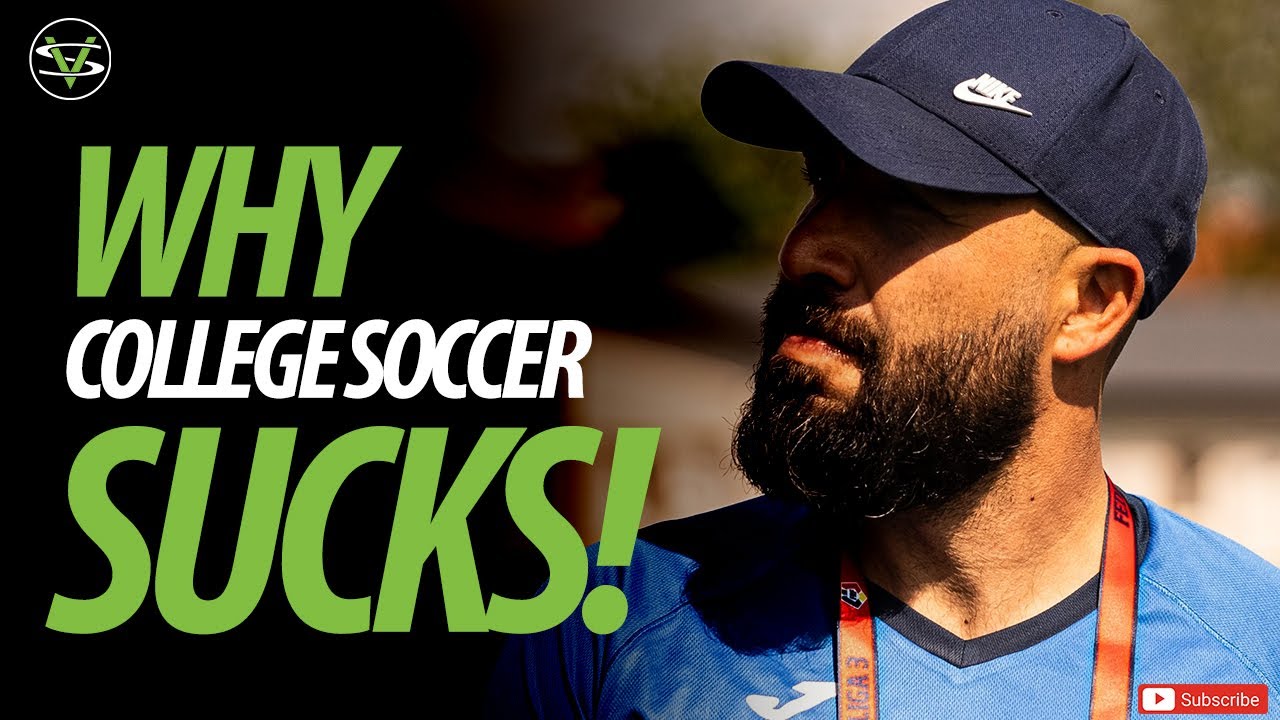
College Soccer Is Great — If You Want an Education
Let’s get one thing straight: college soccer is an amazing vehicle if what you want is a college education. If you can leverage playing soccer to get a scholarship and walk away with a degree, that’s a win. Nobody’s arguing that.
But if you have aspirations of playing professional soccer, the college system can actively work against you. And most people in American soccer don’t want to hear that. College coaches are going to hate this — but it is what it is.
Reality Check: It’s 2026. You can get a degree online. You can also chase the dream. The question is whether the college soccer path is actually helping you get to a professional career — or whether it’s creating a false reality of what pro soccer looks like.
The European System vs. College Soccer
When you move to a country with a real football pyramid, there’s a competitive division at every level — and you have the opportunity to succeed at every one of them. In Poland, a player in the third division can get promoted to the second, which feeds into the Ekstraklasa. In Iceland, a strong season in the first division gets you noticed by Scandinavian clubs. In Costa Rica, the league structure connects directly to CONCACAF competitions. Even in the Australian state leagues, there are pathways into the A-League. The system works because every level leads somewhere.
If you’re 18 years old, working, studying at a university, and playing for a lower division team in any of these countries while getting better every day — there’s always that possibility of being picked up by a bigger club. The pathway exists. Promotion, relegation, domestic cups that create matchups between lower league clubs and top-flight teams — all of it creates opportunities for players to be seen.
In the United States, when you play UPSL, NPSL, or USL League Two, there’s almost never an opportunity to get seen by a bigger club. It’s rare — maybe 0.01% — and that’s being generous. The system is closed. There’s no natural mechanism for upward movement.
College Soccer Creates a False Identity
College soccer creates a false understanding of what it means to be a professional. And this is the part that matters most.
There’s no real pressure. Yes, there’s some pressure — maybe a coach gets fired if they don’t qualify for the tournament. But from the player’s perspective? If you don’t make playoffs, there’s always next year. You have four years. In a professional setting, you have a one-year contract. People are putting money on you to perform. If you don’t perform, you lose that contract. If you do perform, you help the club get promoted, which means TV deals, ticket sales, jersey sales, player sales. That’s the reality of professional football — and college soccer can’t prepare you for it.
The season is too short. Three months out of the year is not realistic compared to the rest of the world. Players overseas are playing 10 months a year. Before they even get to a university-level team, they’ve been in a youth academy that takes the sport as the country’s first priority. Some of the best players in European third and fourth divisions would dominate D1 college soccer — because they’ve been in a completely different system and culture.
The competition culture is different. In American youth soccer, if you’re not good enough, you go play for the C team. In Europe, if you’re not good enough, there is no C team. You feel the pressure of winning and losing. If you’re a striker and you don’t score goals, you don’t have a career. There’s no safety net.
Skip the College Detour. Go Pro Now.
SoccerViza has placed 400+ players into professional contracts across 30+ countries — many of them straight from college or without any college at all.
Book Your Free Call →The Facilities Trap
College facilities are incredible. State-of-the-art training grounds, brand-new gear, top-tier weight rooms. When 20,000 students are paying $60,000 a year, schools can build facilities that rival professional clubs in some countries.
And that’s actually part of the problem.
A D1 player gets used to the best of everything. Then he decides to go pro and expects the same treatment overseas. But here’s the reality: you’re not better than players in the third division of Portugal, the second tier in Sweden, or the state leagues in Australia who are playing in far less impressive conditions. When you come out of college, do not expect the same facilities, the same treatment, the same everything — because it’s just not how professional football works at every level.
What happens is their mindset becomes soft. They arrive in a new environment and think “this is hard, I’m not used to this,” and the minute it gets hard, their mentality drops and they can’t compete. They’re not conditioned for the cutthroat nature of the industry because they grew up in a system where soccer was treated as a hobby, not a business.
The Cutthroat Business of Professional Football
In Europe, professional soccer is a business from the youth level up. If you’re not performing, you get cut — and there’s nowhere else to go. People take it seriously because there’s money at stake. Clubs are selling players for millions of dollars. TV deals are worth hundreds of thousands at the lower levels. Promotion brings bonuses, Europa League and Champions League qualification brings six figures even from smaller countries.
Even if you go play third division in Poland, or second division in Iceland, or the Costa Rican first division and your salary is modest — there are people putting hundreds of thousands of dollars into that club and they expect you to perform. They see you as an investment — an asset that appreciates or depreciates in value. If you perform well, they can make money by selling you, by driving more ticket sales, by attracting sponsors. That’s the competitive reality of professional football everywhere in the world.
The American system — not just college soccer, but the entire American soccer structure — does not create a mindset where players understand this. Americans have always paid to play. There’s no real pressure because if they pay, they expect something in return. If they’re not good enough, they play on the C team. In professional football overseas, someone is investing money in you because they see potential for a return. That’s a completely different dynamic.
So What Should You Do Instead?
If you want to play professional soccer, you need to get into a professional environment as early as possible. That means being in a country with promotion and relegation, domestic cups, and real football infrastructure — whether that’s Poland, Iceland, Costa Rica, Portugal, Australia, Guatemala, or anywhere else where the pyramid is real. It means training 10 months out of the year, competing against professionals, and understanding the business side of the game.
At SoccerViza, we’ve placed 400+ players into professional contracts across 30+ countries — from Scandinavia to Central America, from Western Europe to the South Pacific. Many of them came from college programs where they were talented but stuck in a system that wasn’t preparing them for professional reality. Some skipped college entirely. What they all had in common was the willingness to leave their comfort zone and get into an environment where performances actually lead somewhere.
When we get American players into our Development Center in Costa Rica, we do our best to teach them the professional mentality because the only way they’re going to succeed — and some of them are genuinely talented — is by understanding how competitive the industry is. You have to get results. You have to do your job. And if you don’t — see you later.
The Bottom Line
College soccer is great for what it is — education with soccer on the side. But if you have professional aspirations, stop treating it as the default pathway. The system doesn’t prepare you for the pressure, the business, or the competitive reality of professional football. Get into a real football environment. Train at professional intensity. Learn what it actually means to have your career depend on your performance every single day.
That’s the path. That’s what 400+ SoccerViza players have done. See their stories here.